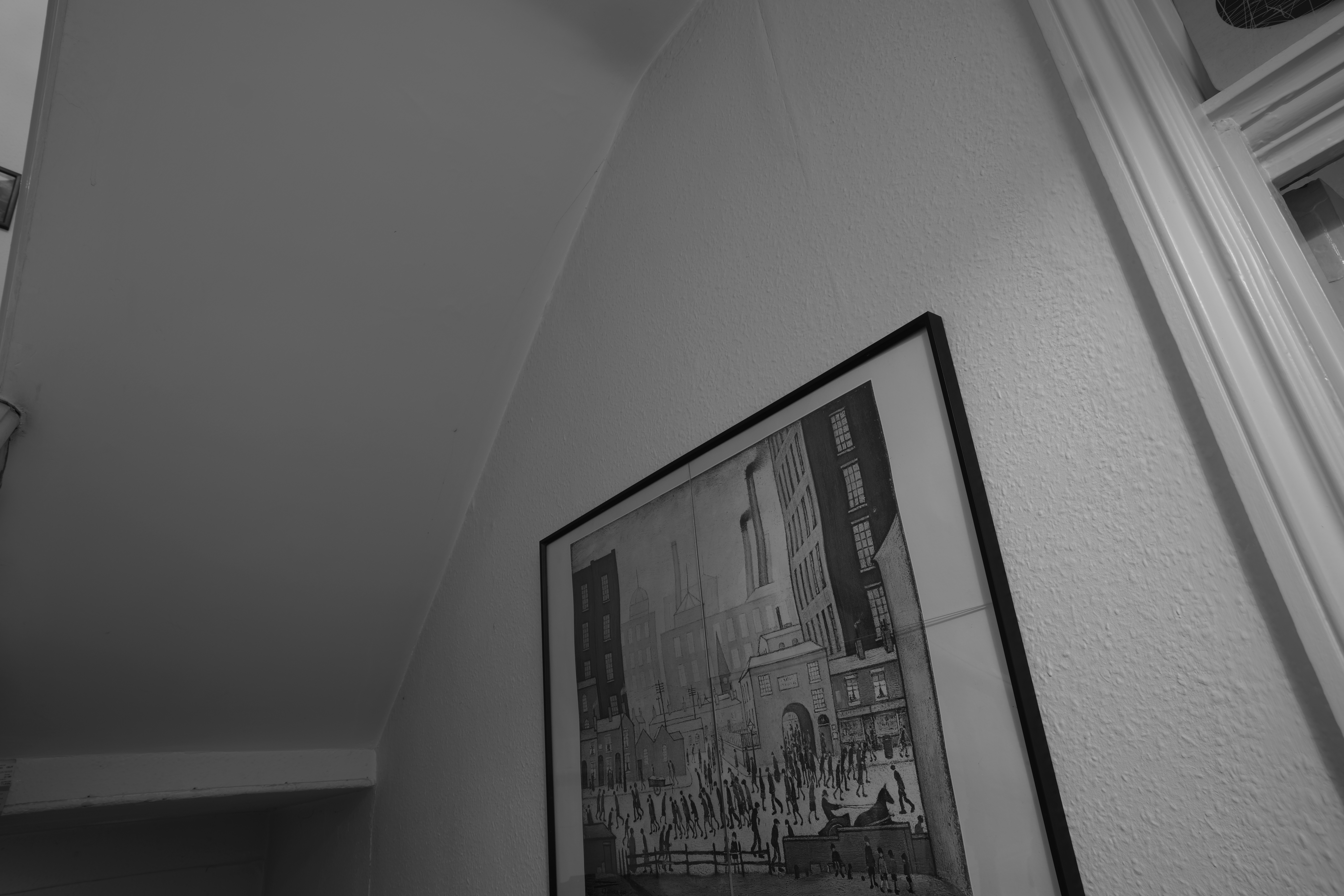


Just a test really … and a demonstration of why you need to print big (one of those black blobs on the water is a guy on a board).

Just a test really … and a demonstration of why you need to print big (one of those black blobs on the water is a guy on a board).
(This is definitely a work in progress; I’ve still got more lens adaptors to buy and more lenses to test)
So I have a new Fujifilm GFX50R with one native lens (63mm) and my fortunes don’t extend to buying more lenses any time soon. Yet I hear that some 35mm lenses will work even though they’re designed to cover the smaller sensor of 35mm (or in many of the cases below 35mm film).
As someone who has been sticking third-party lenses (and I don’t mean Sigma lenses with an EF mount) on my Canon cameras for years the obvious thing to do is buy some adaptors to test the lenses I have.
And on the grounds that I would find this information useful if someone else had posted it (and I’d found it), I decided to put this out there. No guarantees on the accuracy though!
Caveats :-
| Lens | Photo? | Soft Vignetting | Hard Vignetting | Sample (links) |
|---|---|---|---|---|
| Zeiss Makro-Planar 2/100mm ZE | ✓ | No | No | 1 |
| Zeiss Distagon 21/2.8 ZE | ✓ | No | Yes | 1 |
| MC Zenitar 16/2.8 | ✗ | – | Yes | |
| Sigma 12-24 @ 12mm | ✓ | No | No | |
| Sigma 12-24 @ 24mm | ✓ | Yes | Yes | |
| Canon 24-105mm f/4.0 L | ✗ | Yes | Yes | |
| Canon 200-400mm mk1 @ 200 | ✗ | No | No | |
| Canon 200-400mm mk1 @ 400 | ✗ | – | Yes | |
| Leica Elmarit-R 2.8/19mm (1977) | ✗ | – | Yes | |
| Leica Summilux-R 1.4/50mm (1971) | ✗ | Below f/11 | No | |
| Leica Elmarit-R 2.8/35mm (1984) | ✗ | Yes | No | |
| Leica Elmarit-R 2.8/180mm (1975) | ✓ | No | No | |
| Leica Elmarit-R 2.8/90mm (1966) | ✓ | No | No | 1 |
| Leica Macro-Elmerit-R 2.8/60mm (1977) | ✓ | Below f/4.0 | No | |
| Leica Summicron-R 2/50mm (1965) | TODO | TODO | TODO | |
| Olympus OM 18mm f/3.5 | ✓ | – | Yes | |
| Olympus OM 85mm f/2.0 | ✓ | Yes | No | |
| Olympus OM 35mm f/2.8 | ✓ | Yes | No | |
| Carl Zeiss Jena 3.5/135mm | ✓ | No | No | 1 |


I have been looking at slightly newer cameras than my ancient Canon 1DS III. There are two big things that have happened since I last took a serious look at cameras :-
Funny thing is that whilst the “film vs digital” argument has gotten a bit quieter, it is still bubbling away. And as a solely digital photographer, my position on “film vs digital” is simply: it is the final print that counts however you got there.
Back in the days when film was the only viable choice the quality difference between 35mm film and medium format film was dramatic. And similarly between medium format film and large format film.
In the digital world, the difference is more nuanced, and there is more choice in the size of the sensor (“film”) – Micro 4/3 (which is equivalent to the old 110 film format), APC, “full frame”, and “medium format”.
The least honest phrase is of course “medium format” – medium format film came in a variety of different sizes; all of which are actually larger than the medium format digital sensors. The largest “medium format” sensor is approximately 54mm x 40mm; the smallest film medium format is 60mm x 45mm.
Comparing digital and film sizes is pretty irrelevant; with film, quality is directly proportional to size whereas with digital many factors contribute to quality; sensor size being just one.
Part of that quality increase in size is simply down to the increased cost – if you have to make a digital sensor expensive because it is big (fewer sensors per wafer and a higher proportion of them won’t meet the quality standard), then you need to make it better in quality or nobody will buy it. Of course there are also scientific reasons why a bigger sensor is better – or the fancy car priced Phase One cameras wouldn’t have big sensors.
But back to digital sensor size – let us stop calling so-called medium format sensors “medium format” and come up with a new phrase – perhaps “super-frame” and give the crop-factor – 1.67 or whatever it is.